Posts in the category

Yves Saint Laurent + Chanel

  • By The Museum at FIT
  • In General
  • On 16 Apr | '2015
  • permalink

Today we bring you insight from co-curator Emma McClendon on Yves Saint Laurent’s inspiration from Gabrielle “Coco” Chanel. For more information on the many inspirations of Yves Saint Laurent, check out the essays in the book Yves Saint Laurent + Halston: Fashioning the 70s.

____________________________

Historical pastiche was a significant part of Yves Saint Laurent’s design strategy throughout his career. It was especially important during the 1970s, when he was developing his unique voice, and the signature styles of earlier French couturiers became a crucial source of inspiration. These included Christian Dior’s ultra-feminine silhouettes from the 1950s, as well as the hyper exoticism of Paul Poiret from the 1910s. But the couturier of greatest importance to Saint Laurent was Gabrielle “Coco” Chanel.
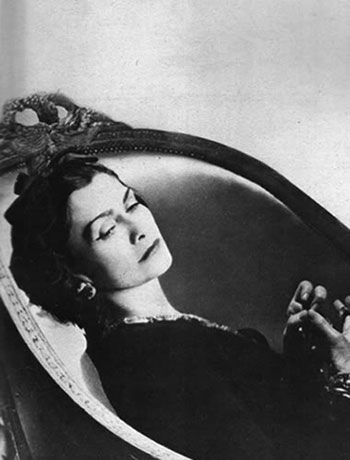
Gabrielle “Coco” Chanel, photographed by Horst P. Horst, 1937, via

Gabrielle “Coco” Chanel, photographed by Horst P. Horst, 1937.
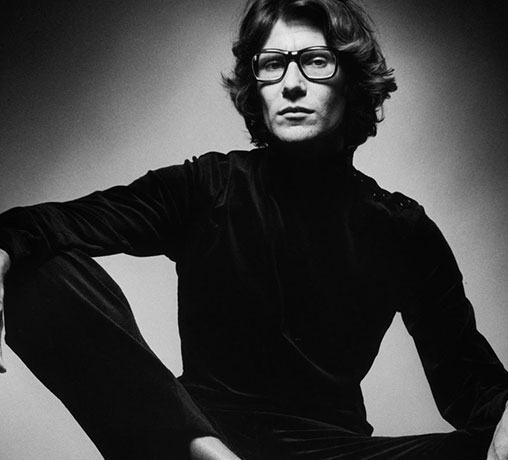
Yves Saint Laurent, photographed by Jeanloup Sieff, 1971, via 74 Gazette

Yves Saint Laurent, photographed by Jeanloup Sieff, 1971, via 74 Gazette

Chanel affected not only Saint Laurent’s aesthetic, but his entire approach to fashion. He felt by 1970 that Dior’s tradition of unveiling a new silhouette with each collection was out of date. In Saint Laurent’s own words: “Now it is ridiculous to think that clothes must change, that hemlines must change, that women want pants this season and not the next.”1 In contrast, Chanel’s interest in creating a fashionable uniform or “style” inspired Saint Laurent to search for a “uniform” of his own. As reporters Claude de Leusse and Patricia McColl recounted in Women’s Wear Daily in 1970, “[Saint Laurent] says he’d be perfectly happy to see every woman in the world in the same dress. ‘A uniform for day and a uniform for night.’… It is in essence, the Chanel approach to fashion… Evolution rather than revolution.”2
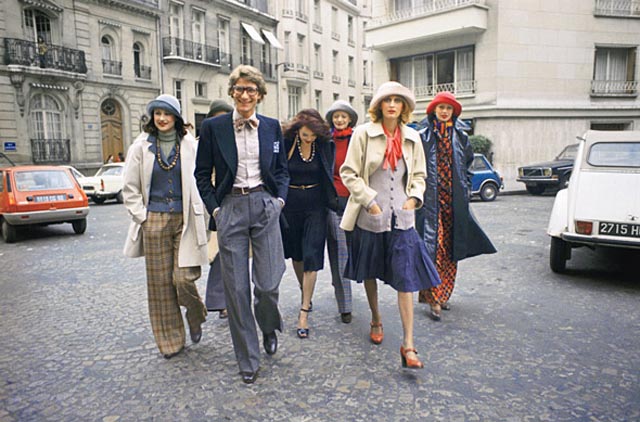
Jean-Luce Hure, photograph of Yves Saint Laurent and models wearing his designs in Paris that appeared on the front page of Women's Wear Daily, April 24, 1972.

Jean-Luce Hure, photograph of Yves Saint Laurent and models wearing his designs in Paris that appeared on the front page of Women’s Wear Daily, April 24, 1972.

In 1972, the picture above appeared on the front page of Women’s Wear Daily. It shows Saint Laurent strutting down the street surrounded by models in his latest designs. Underneath the photograph, de Leusse and McColl declared, “Yves St. Laurent continues the spirit of Coco Chanel. His clothes for the Rive Gauche fall/winter collection are as relaxed and easy as Chanel’s were. But the look is pure Yves.”3

Saint Laurent’s Chanel-inspired uniform developed into a vocabulary of essential garments that he proclaimed to be the new basics of the fashionable wardrobe. During the 1970s, this uniform of basics became the backbone of Rive Gauche (his ready-to-wear line and “laboratory” for new designs). Once set, it allowed Saint Laurent to manipulate a broad range of motifs, materials, and inspirations within the same lexicon of style.

(left) Saint Laurent Rive Gauche, sweater, camel wool and fur, 1973, France, 89.32.6, gift of Catherine Cahill; (right) Yves Saint Laurent, ensemble, multi-color wool, silk, and fur, 1972, France, 95.58.1, gift of Judith Rudner Kessel.

(left) Saint Laurent Rive Gauche, sweater, camel wool and fur, 1973, France, 89.32.6, gift of Catherine Cahill;
(right) Yves Saint Laurent, ensemble, multi-color wool, silk, and fur, 1972, France, 95.58.1, gift of Judith Rudner Kessel.

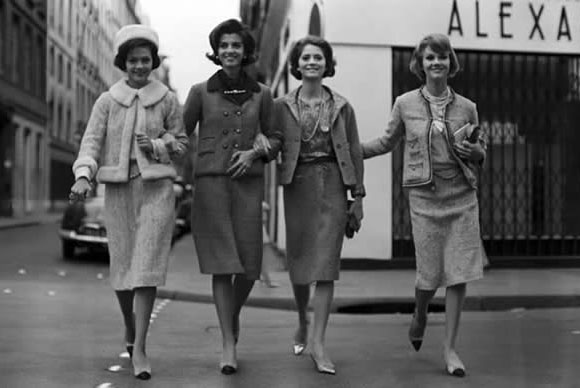
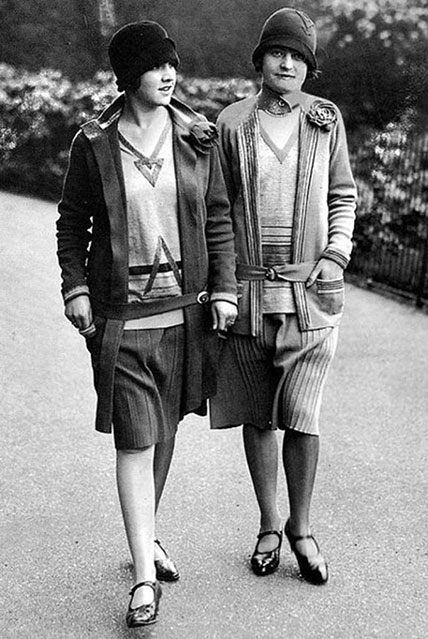
In the exhibition Yves Saint Laurent + Halston: Fashioning the 70s, Saint Laurent’s indebtedness to Chanel is most apparent in the knit suits seen above. Their long knit sweaters, wool skirts, and silk blouses seem to fuse Chanel’s iconic post-war suits with her 1920s chemise-silhouette ensembles (see below).
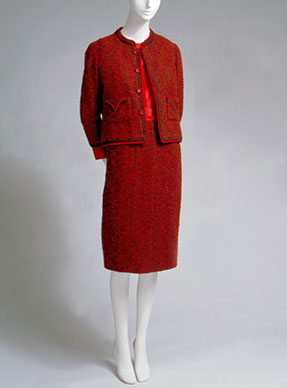
Chanel, suit, red wool tweed and silk, 1959, 80.261.2, gift of Mrs. Walter Eytan
Chanel, suit, red wool tweed and silk, 1959, 80.261.2, gift of Mrs. Walter Eytan

Paul Schutzer, photograph of models wearing Chanel suits featured in LIFE magazine, September 1961. Via Sage Collection

Paul Schutzer, photograph of models wearing Chanel suits featured in LIFE magazine, September 1961. Via Sage Collection

Chanel, chemise-style day dress, blue silk crepe, 1926,  80.13.3, Gift of Mrs. Georges
Chanel, chemise-style day dress, blue silk crepe, 1926, 80.13.3, Gift of Mrs. Georges

Photograph of models in Chanel’s chemise-style suits, Paris, 1926.

Photograph of models in Chanel’s chemise-style suits, Paris, 1926.
 

This connection to Chanel is further emphasized in photographs of a model dressed in Saint Laurent from the August 1973 issue of Vogue (below). Here, the same Rive Gauche, fur-trimmed sweater as the one on view in the exhibition at MFIT has been accessorized with a close-fitting, cloche-like hat (left). The model poses in profile, nonchalantly placing one hand on her hip.
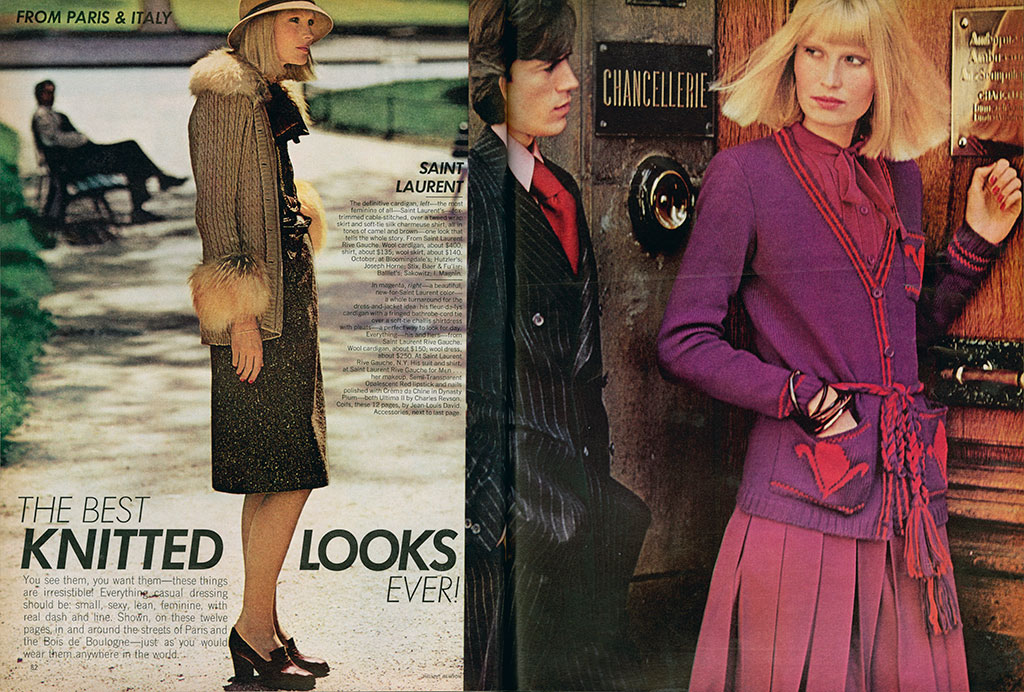
Helmut Newton, photographs of a model wearing Yves Saint Laurent, Vogue, August 1, 1973, Newton / Vogue; © Condé Nast

Helmut Newton, photographs of a model wearing Yves Saint Laurent, Vogue, August 1, 1973, Newton / Vogue; © Condé Nast

On the opposite page the same model appears in a similarly styled ensemble consisting of a long knit sweater worn over a high-neckline dress, punctuated by a bow at the base of the neck. The model’s angular, cropped bob completes both looks, and seemingly transforms her into a clone of Chanel herself.

via Marie Claire

Gabrielle “Coco” Chanel, c.1969, via Marie Claire UK

Gabrielle Chanel in Biarritz, 1928. Photo by RogerViollet. via Buro 24/7

Gabrielle Chanel in Biarritz, 1928. Photo by Roger Viollet, via Buro 24/7
 

Beyond the examples discussed here, Chanel’s influence on Saint Laurent can be felt throughout his work, from his le smoking tuxedos to his exotic evening pajamas. Chanel’s dedication to creating streamlined, androgynous, and modern garments for women with an active lifestyle inspired Saint Laurent to transform the fashionable wardrobe in the 1970s, and the effects of his developments can still be seen today.

1. Yves Saint Laurent, quoted in Nina Hyde, “Saint Laurent” in The Washington Post, November 26, 1972, p.F1.

2. WWD, by Claude de Leusse and Patricia McColl, “On the Yves of Evolution” in Women’s Wear Daily, June 15, 1970, p.4-5.

3. “YSL- Sure and easy” in Women’s Wear Daily, April 24, 1972, p.1.

____________________________

Love this post? Share it on social media with the links below. Saturday, April 18th is the final day to see Yves Saint Laurent + Halston: Fashioning the 70s. Hurry in, and tweet using #YSLhalston.
-MM
Historicism: Halston

  • By The Museum at FIT
  • In Object post
  • On 15 Apr | '2015
  • permalink

Today we bring you an excerpt from our Special Exhibitions Gallery on Halston + historicism:

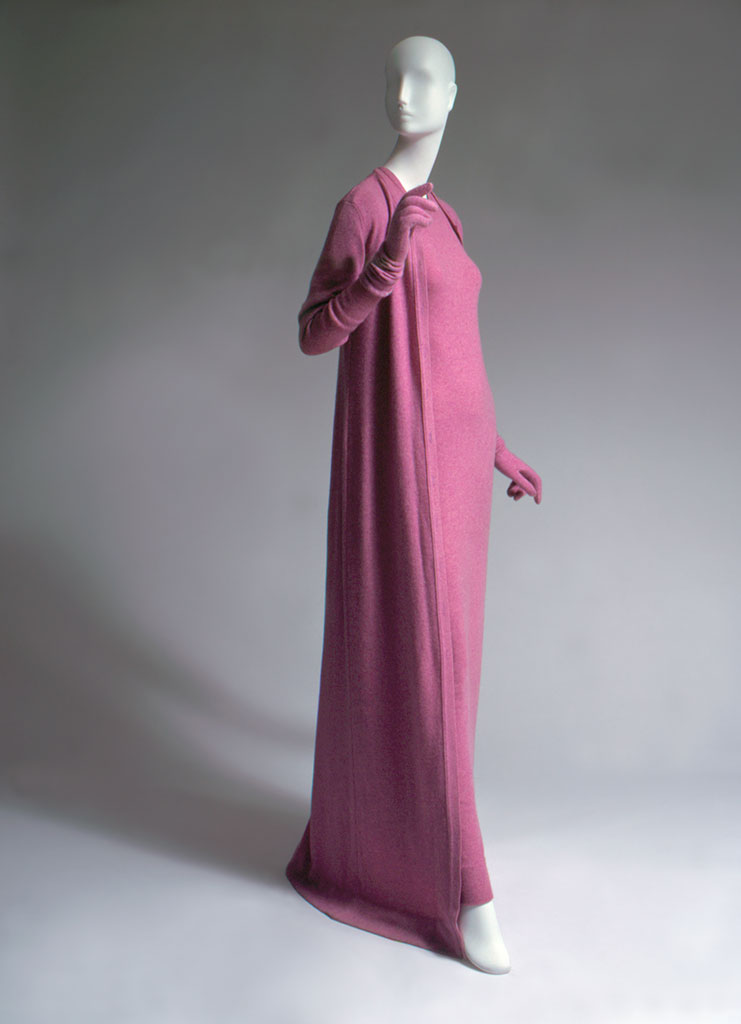
Halston’s use of historical elements to create new collections was sparing. Rather than re-interpret the designs of those who came before him, he made subtle allusions to those designers whose work he most admired. He was inspired by body-revealing activewear and the sinuous, bias-cut gowns of Madeleine Vionnet from the 1930s, while primary influences from the 1940s included the cashmere sweater sets of Mainbocher and the ingenious ties and closures employed by Claire McCardell.

Halston evening ensemble, purple cashmere, c. 1973, USA, 88.29.2, gift of Elizabeth Pickering Kaiser

Halston evening ensemble, purple cashmere, c. 1973, USA, 88.29.2, gift of Elizabeth Pickering Kaiser

Like his predecessors, Halston rejected standard fit techniques, such as darts and waistbands; wherever possible, he removed linings and inner structures, as well as buttons and notions. He also painstakingly modified a small number of basic items that were worked and reworked until their proportions and fabrications became perfect.

Curator Patricia Mears reveals Halston’s approach to design in the book Yves Saint Laurent + Halston: Fashioning the 70s:

Halston also differentiated himself from his contemporaries (and most designers today), in that he had a strong belief in the process of evolution. Rather than espousing the slash-and-burn practice in which designers embraced and then quickly discarded trends, Halston painstakingly modified a small number of basic items that were worked and reworked until their proportions and fabrications were perfect.

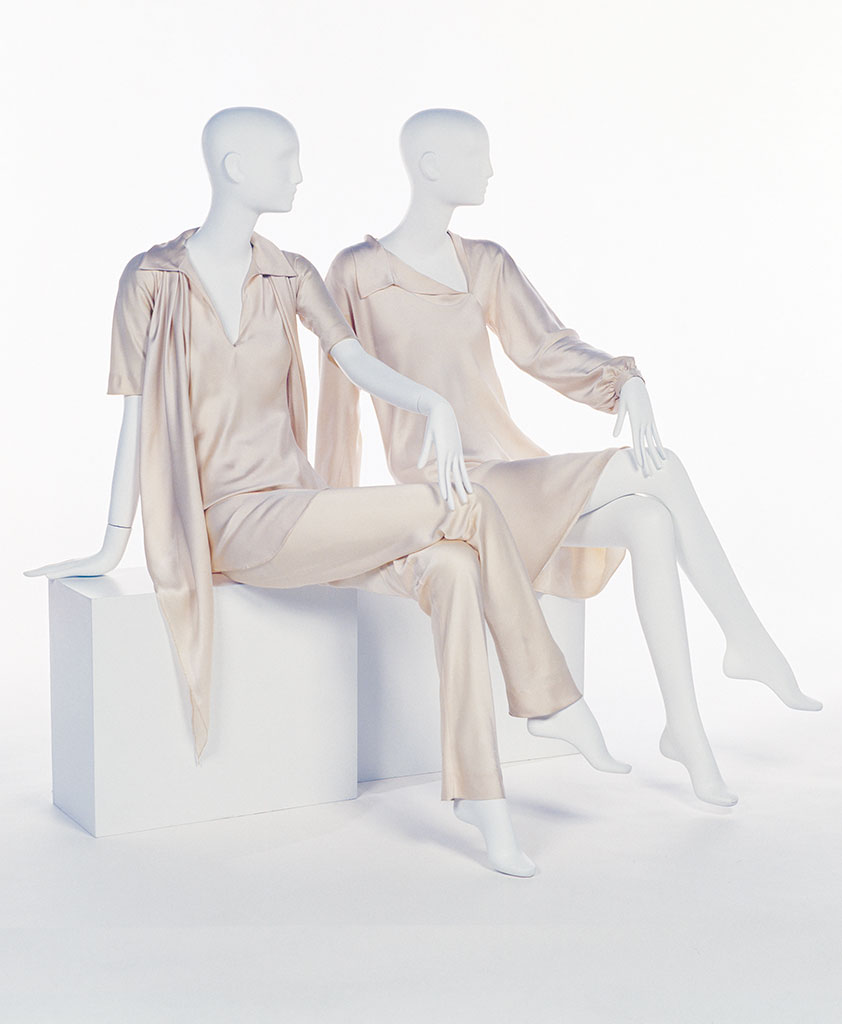
(left) Halston, pajama set, silk crepe de chine, c. 1976, USA, 78.57.41, gift of Ethel Scull  (right) Halston, tunic, silk satin, 1976, USA, 84.11.2, gift of Sue Christine Hartman

(left) Halston, pajama set, silk crepe de chine, c. 1976, USA, 78.57.41, gift of Ethel Scull
(right) Halston, tunic, silk satin, 1976, USA, 84.11.2, gift of Sue Christine Hartman

Halston’s evolutionary process connected him to the work of past couturiers. Mears wrote that by “refreshing and updating the silhouettes, integrating more comfort, and blurring the lines between activewear, daywear, and evening clothes,” Halston created garments that were perfect for the modern jet-set lifestyles of the 1970s.

Halston often refined elegant examples of historic fashions, and as Mears noted, “one of the great aspects of his success was his ability to balance beauty and modernity.” The 1930s lounging pajama was one such example:

Halston modernized and formalized the 1930s pajama, an ensemble that was to be worn in either a casual, sporty environment or at home. On top, although there were numerous variations, Halston usually crafted his tunic with a set-in collar, deep V-neckline, long sleeves, a curved hem that covered the hips, and a slightly narrowed waist. His pants were svelte but not tight. By 1976, most sources record that Halston was cutting all such pants, especially those made of silk satin or crepe, on the bias. This technique insured a slim fit but also a certain degree of elasticity.

Halston jumpsuit, black silk jersey, c.1976, USA, 79.66.40, gift of Ethel Scull.

Halston jumpsuit, black silk jersey, c.1976, USA, 79.66.40, gift of Ethel Scull.

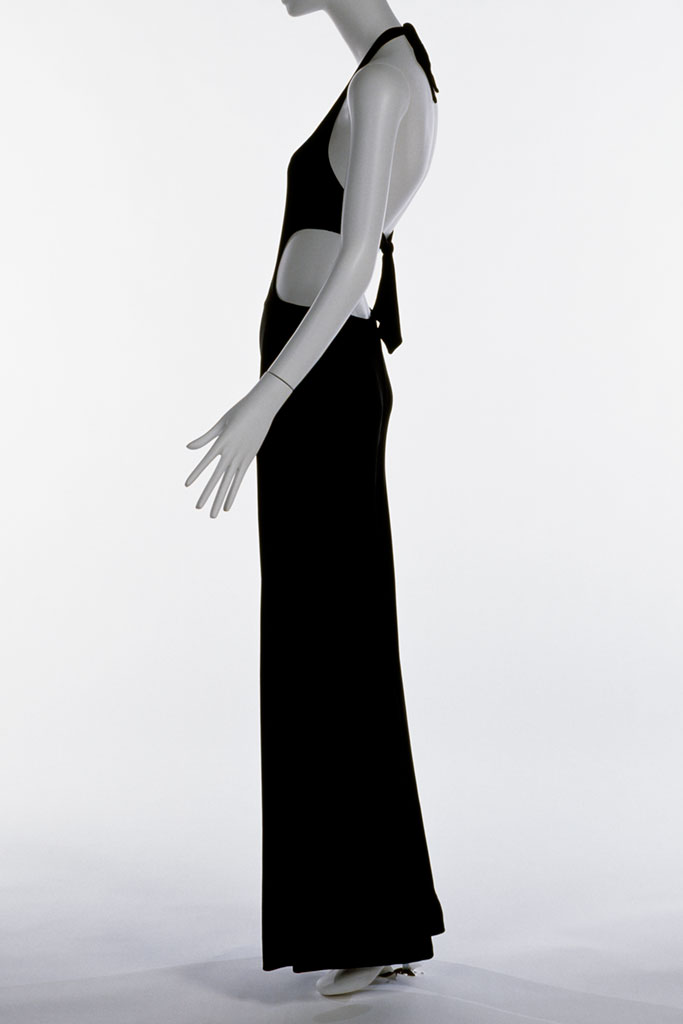
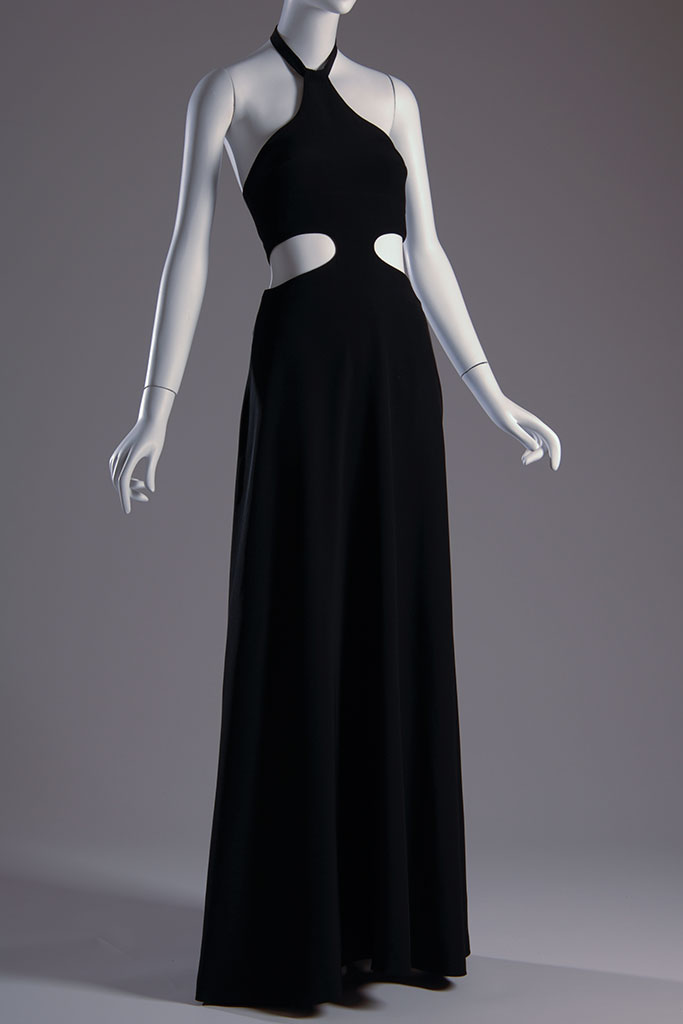
Halston’s “swimsuit dress” is one of many dresses he created that were inspired by halter neck dresses of the 1920s-30s and activewear from the 1930s. Halston channeled the elegance and freedom of movement found in these historical styles and re-contextualized them, making them suitable for the fast-paced lifestyles of the 1970s. Mears wrote that “While similar exposure of the body did exist in swimwear during the 1930s, Halston expanded the amount of skin on view, and took the idea from the beach to the ballroom.” The halter neck silhouette, bias-drape, and side cut-outs in Halston’s “swimsuit dress” are features similar to those found in this Madame Grès evening dress from c.1966-68. Mears connects and contrasts the work of Halston and Grès in an earlier post.

Madame Grès evening dress, black silk, c.1966-68, courtesy of Hamish Bowles. From the book Madame Grès: Sphinx of Fashion

Madame Grès evening dress, black silk, c.1966-68, courtesy of Hamish Bowles. From the book Madame Grès: Sphinx of Fashion.

Love this post? Share it on social media with the links below. The exhibition is on view through the end of the week, April 18, 2015—don’t miss it! Share your experience using #YSLhalston.

—MM

The Halstonettes

  • By The Museum at FIT
  • In General
  • On 7 Apr | '2015
  • permalink

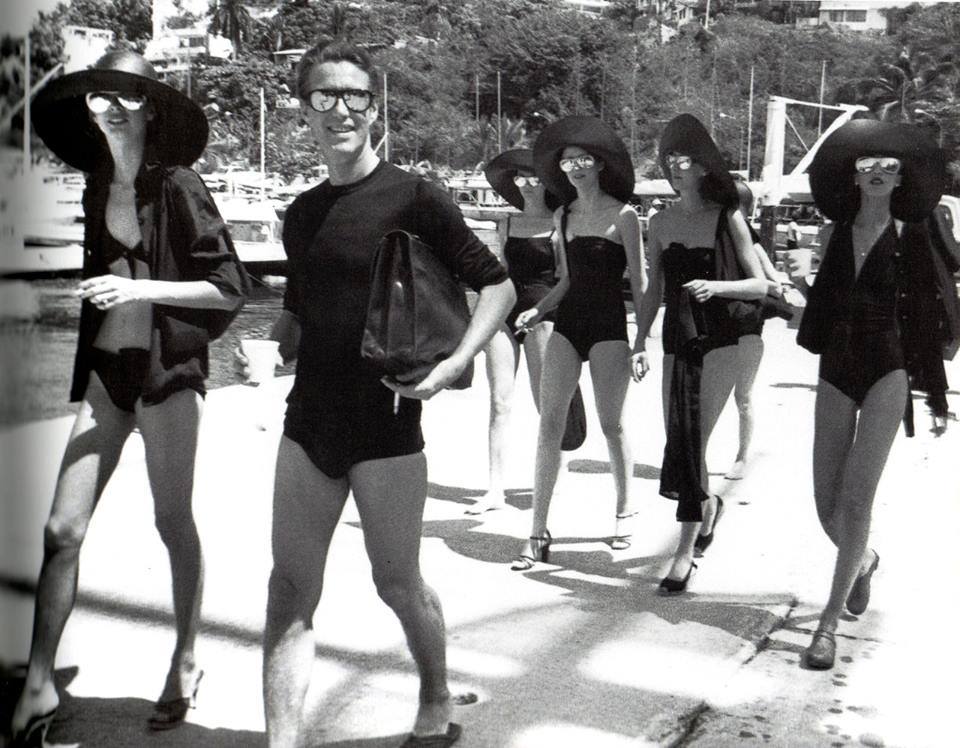
Halston and Halstonettes in Acapulco during the Braniff press tour, 1976. Photograph by: Lynn Karlin

Halston and the Halstonettes in Acapulco during the Braniff press tour, 1976. Photograph by: Lynn Karlin

The cabine of Halston models that seemed to follow the designer everywhere was known as the “Halstonettes,” a term coined by the fashion editor André Leon Talley. In the book Yves Saint Laurent + Halston: Fashioning the 70s, curator Patricia Mears described Halston’s ever-present entourage of models:

This assemblage of young women was striking not only for their tall, lean bodies and beautiful faces, but also for their ethnic diversity. On one end of the spectrum was the cool Nordic blond, Karen Bjornsen, and on the other, the sensual African American, Pat Cleveland. Most prominent of all was Anjelica Huston, daughter of the famed movie director John Huston. Collectively, the Halstonettes did more than reflect the designer’s clothing style, they mirrored his self-image: young, beautiful, glamorous, haughty, vibrant, and photogenic.

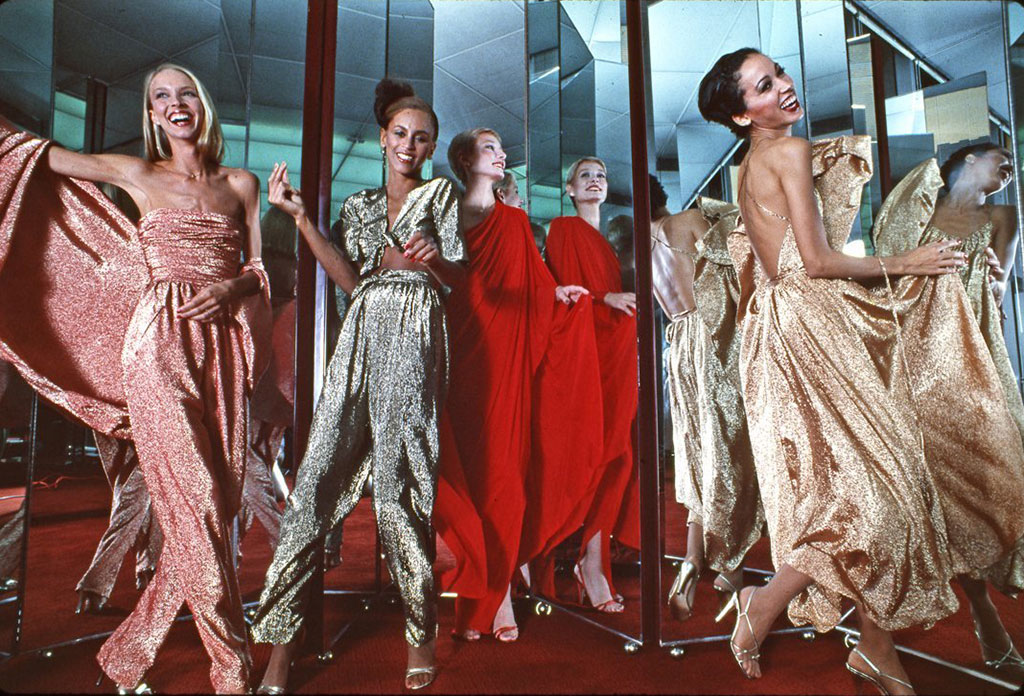
Halston and the Halstonettes wearing bodysuits in black satin, black cashmere, brown wool, and hothouse red satin, May 1977. Photograph by: Harry Benson

Halston and the Halstonettes wearing bodysuits in black satin, black cashmere, brown wool, and hothouse red satin, May 1977. Photograph by: Harry Benson

Halston treated design as a whole element. Relentless in his quest to achieve a total aesthetic vision, he was determined to have his design sense inform every part of any project he undertook, from elegantly understated evening gowns to the meticulously assembled interiors of his showrooms, offices, and homes. Marvin Traub (president of Bloomingdale’s) recalled that when Bloomingdale’s opened its Halston boutique in August 1969, “Halston wanted to be involved in every detail, down to the shelving. The night before the boutique opened, he stayed up all night to personally sew the drapery and fabrics.”1 The models he chose were central to communicating the Halston look and lifestyle, and the Halstonettes appeared on the runway season after season. They traveled with the designer en masse to social gatherings and press outings—from nights at Studio 54 to the Great Wall of China.

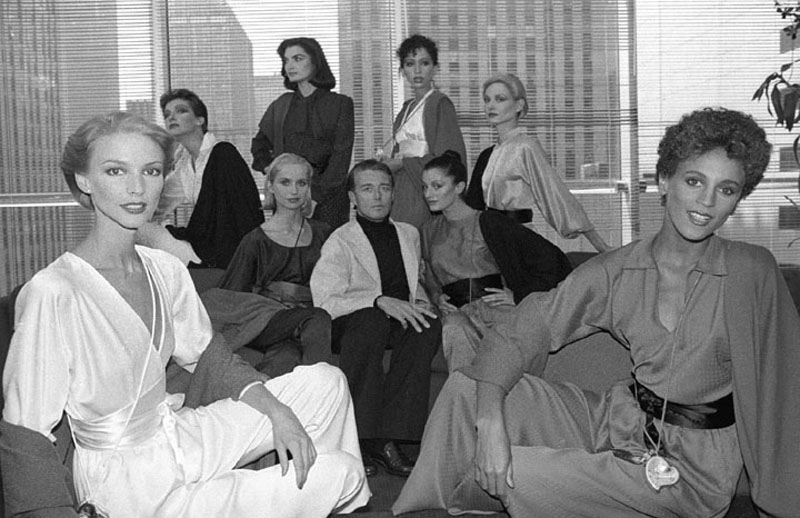
Halston and models at Olympic Tower 197#

Halston and models at Olympic Tower 197#. Photograph by Dustin Pittman. via A Shaded View on Fashion

When Halston designed uniforms for Braniff Airlines in 1976, he and his entourage flew to Acapulco to attend an opulent celebration hosted by the company. The Halstonettes appeared with the designer each day, dressed head-to-toe in Halston. Often, the models’ ensembles were identical. Together, the group functioned as a kind of mobile billboard. The models’ diversity showed the versatility and modernity inherent in Halston’s clothing, and in turn, the uniformity of the model’s ensembles served to highlight each woman’s unique features. A key principle of Halston’s work was that his designs were made to flatter a diverse range of women; the Halstonettes were the ideal embodiment of the designer’s intention to create clothes that suited women of diverse ages, shapes, and sizes. He once said, “You have to design for what people are, not what you’d like them to be.”2

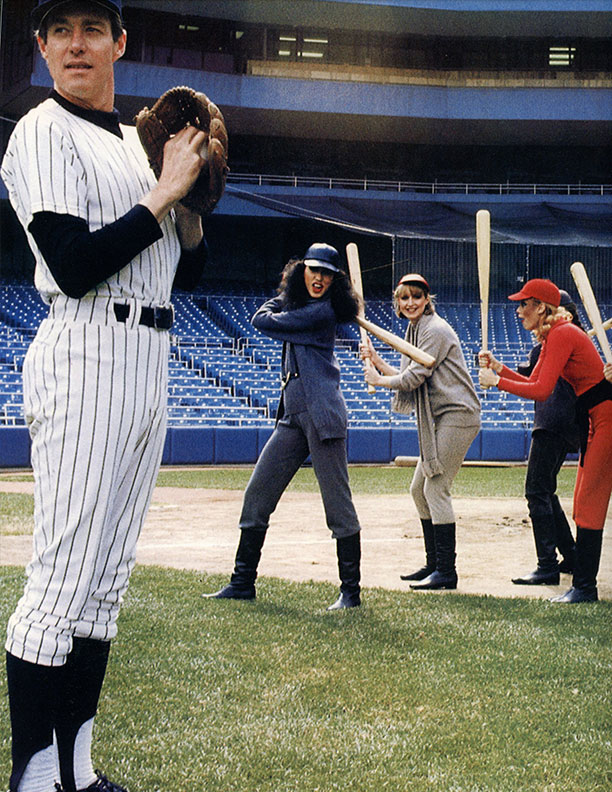
Halston shows new looks for Fall 1976 at Yankee Stadium.

Halston shows new looks for Fall 1976 at Yankee Stadium. via Mark D. Sikes

Four Models by Harry Benson. (left to right) Karen Bjornsen, Alva Chinn, Connie Cook, Pat Cleveland, 1978. via Holden Luntz Gallery width=

Four Models by Harry Benson. (left to right) Karen Bjornsen, Alva Chinn, Connie Cook, Pat Cleveland, 1978. via Holden Luntz Gallery

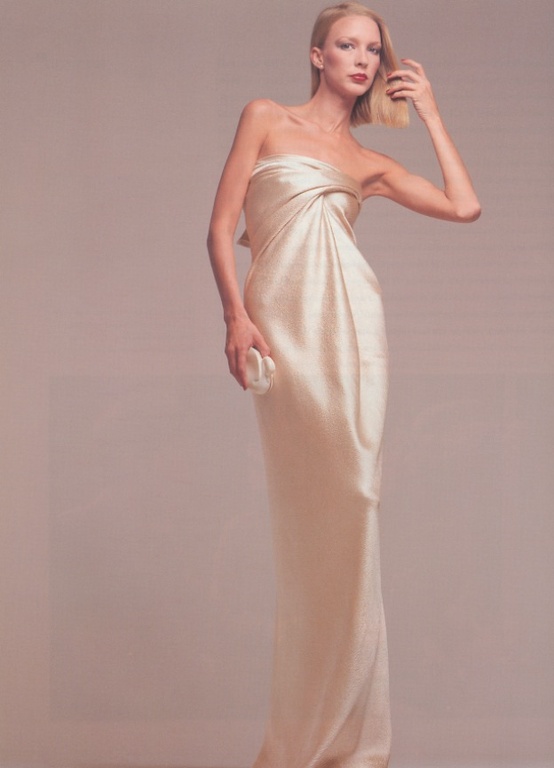
Karen Bjornsen wearing hammered silk satin spiral cut strapless gown, 1976. Photograph by: Francesco Scavullo

Karen Bjornsen wearing hammered silk satin spiral cut strapless gown, 1976. Photograph by: Francesco Scavullo

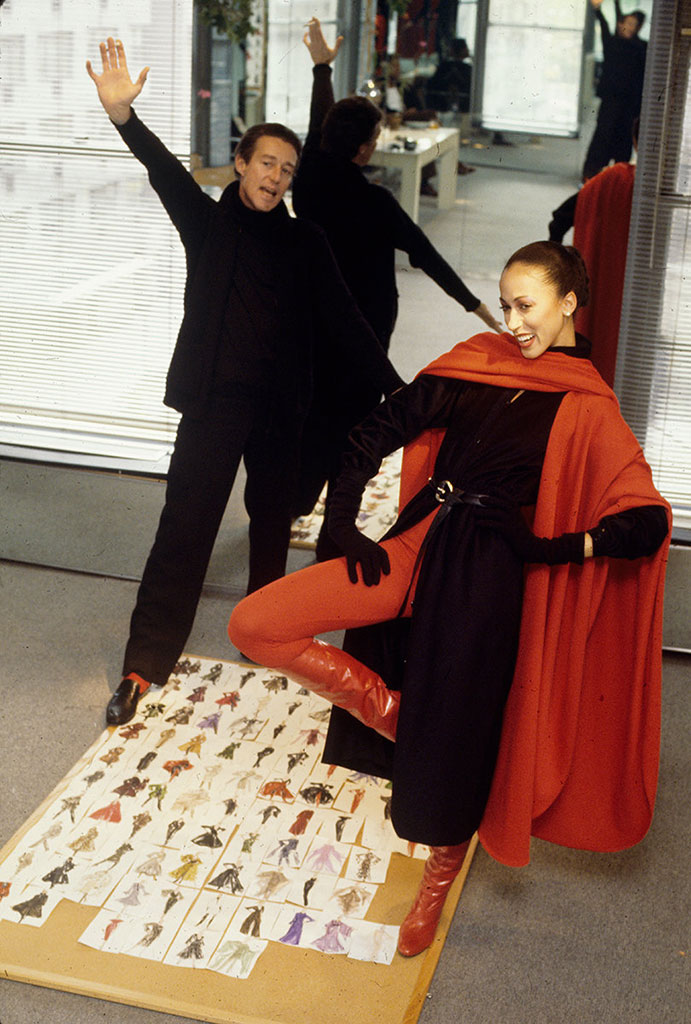
Halston with Pat Cleveland wearing cashmere jersey wrap dress over red cashmere body suit with red cashmere wrap, April 1977. via Vogue

Halston with Pat Cleveland wearing cashmere jersey wrap dress over red cashmere body suit with red cashmere wrap, April 1977. via Vogue

In 1979, Halston and a twenty-eight person entourage—including the Halstonettes, assistants, executives, and friends—embarked on an international tour to promote American fashion, visiting six cities on three continents over a span of twenty-four days. The entourage was taken to Kennedy Airport in nine identical limousines, and Women’s Wear Daily reported that the group was “dressed in streamlined sportswear—in contemporary shades of red, black, beige, and ivory, so anyone could stand next to anyone and not clash—sunglasses as glossy black and secludingly impenetrable as the limos, they watched as piece after piece of matching brown Ultrasuede luggage covered the sidewalks.”3 The tour began in Los Angeles, then made stops in Tokyo, Beijing, Shanghai, and Paris.

Photograph: R. Prigent / Sygna

Halston and entourage visit the Great Wall of China outside Beijing. Photograph: R. Prigent / Sygna. For a full list of those pictured, see p.47 in the book Halston: An American Original

Preparations for the tour took weeks. Color-coordinated ensembles, along with schedules of when and where they were to be worn, were provided to the entire group. Halston said, “The only thing I didn’t furnish was their underwear and something to sleep in…That’s the fascination of it—to be able to edit a wardrobe down to the pieces necessary for a world tour.”4 Remarking on his grand design, Halston said “I wanted it like a little movie. It makes it more amusing and removes the whole curse of it being just a business thing. If we directed our whole planet the way we would a play or a movie, it would make life more interesting for everyone.”5 Pat Cleveland remembered, “We were like migrating birds, well-choreographed, all color-coordinated.”6

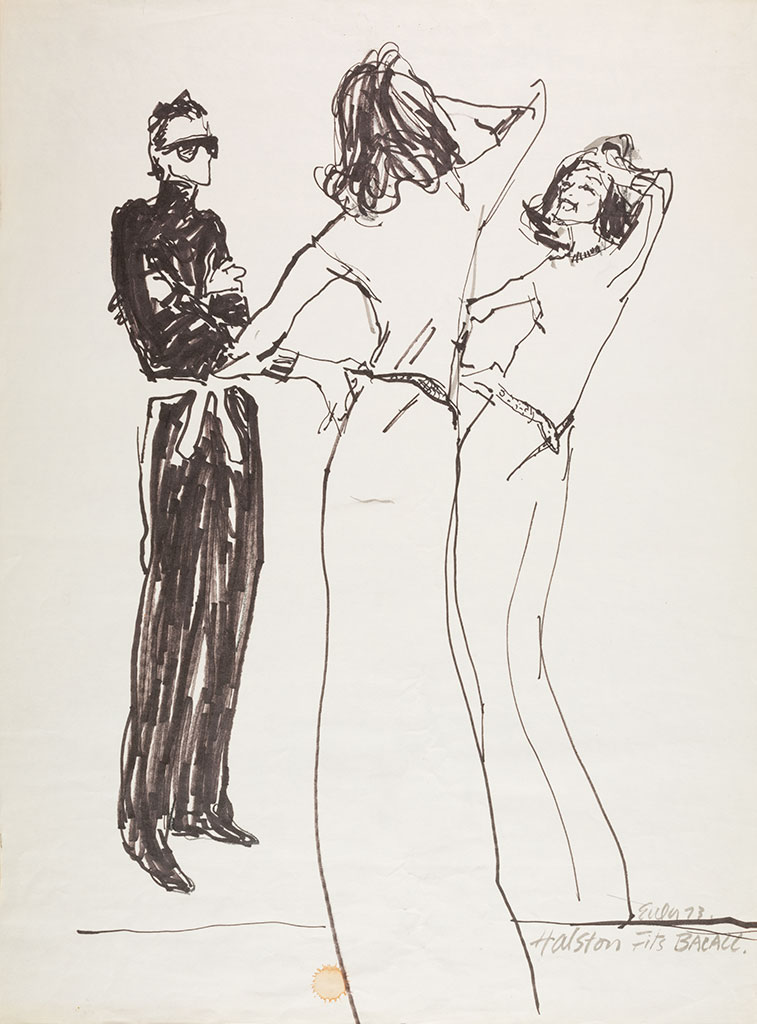
Joe Eula, illustration of Halston fitting Lauren Bacall, undated, The Halston Archive, MFIT

Joe Eula, illustration of Halston fitting Lauren Bacall, undated, The Halston Archive, MFIT

If Halston needed an affirmation of his modernist aesthetic, he got it from this celebrity clientele. The women who purchased and wore his garments were as diverse as his models; Jacqueline Kennedy Onassis, Liza Minnelli, Babe Paley, and Bianca Jagger were all friends and loyal clients. Another close friend was Lauren Bacall, who wore his designs both on-screen and off. In 1973, for the televised version of the play Applause, Halston created twelve full looks for Bacall, including an ice-blue jersey evening gown. During the 1970s, Bacall was a crossover client who wore both Halston + Yves Saint Laurent. MFIT’s permanent collection includes several ensembles from both designers donated by Bacall, and key pieces are on view in Yves Saint Laurent + Halston: Fashioning the 70s.

To see more ensembles donated to MFIT by Lauren Bacall, be sure to visit the graduate student exhibition Lauren Bacall: The Look online. Love this post? Share it on social media with the links below. Stay tuned for more interviews and insights from #YSLhalston.
—MM

1. Elaine Gross and Fred Rottman, Halston: An American Original (New York: HarperCollins), 1999, p. 10.

2. Ibid., p. 64.

3. Ben Brantley, “Halston’s Hollywood Hi: Eyeview,” Women’s Wear Daily, September 5, 1980.

4. Gross and Rottman, p. 46.

5. Ibid., p. 47.

6. Ibid., p. 46.