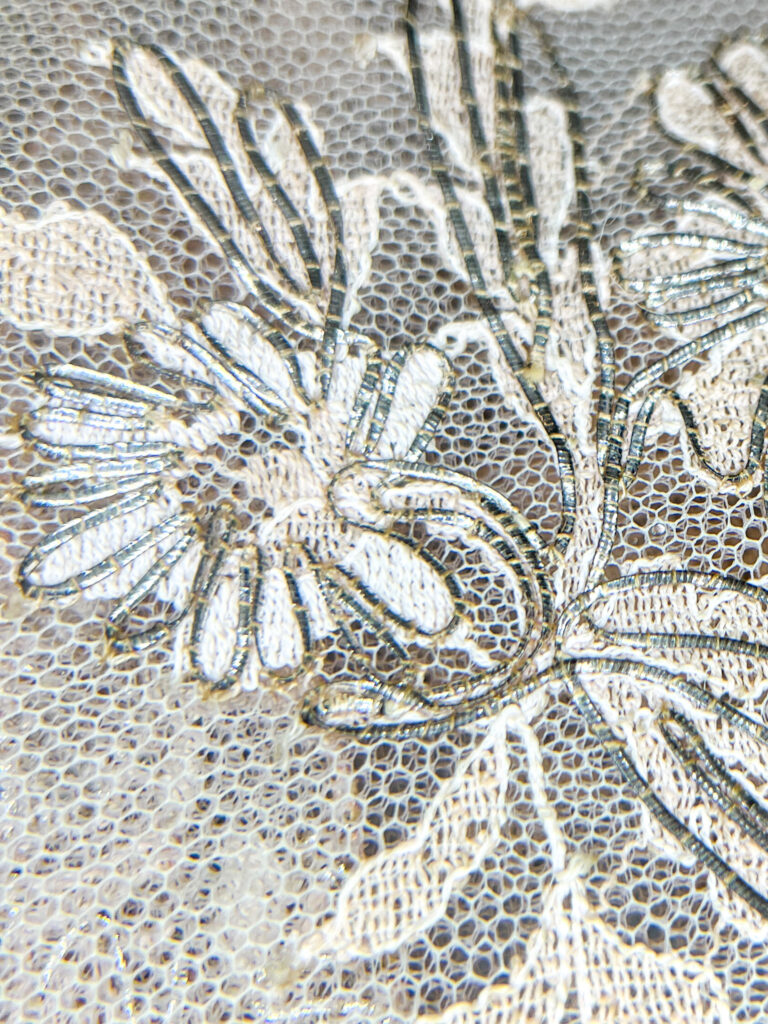
Glittering Materiality and Conservation
Textile conservators work to preserve objects in museum collections so they can continue to be displayed for the public, often using research and analytical tools to understand and protect the items.

Advertisement for Metlon metallic yarn in American Fabrics magazine
Winter 1953-1954
Fashion and Textile Studies Graduate Study Collection
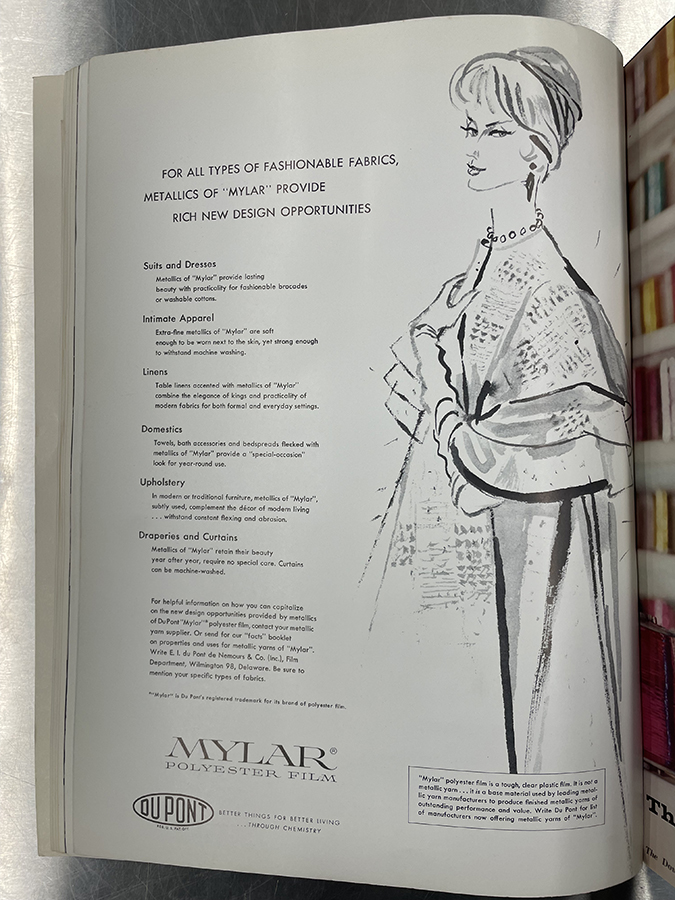

Mylar and Lurex advertisements in American Fabrics magazine
Spring 1959
Fashion and Textile Studies Graduate Study Collection


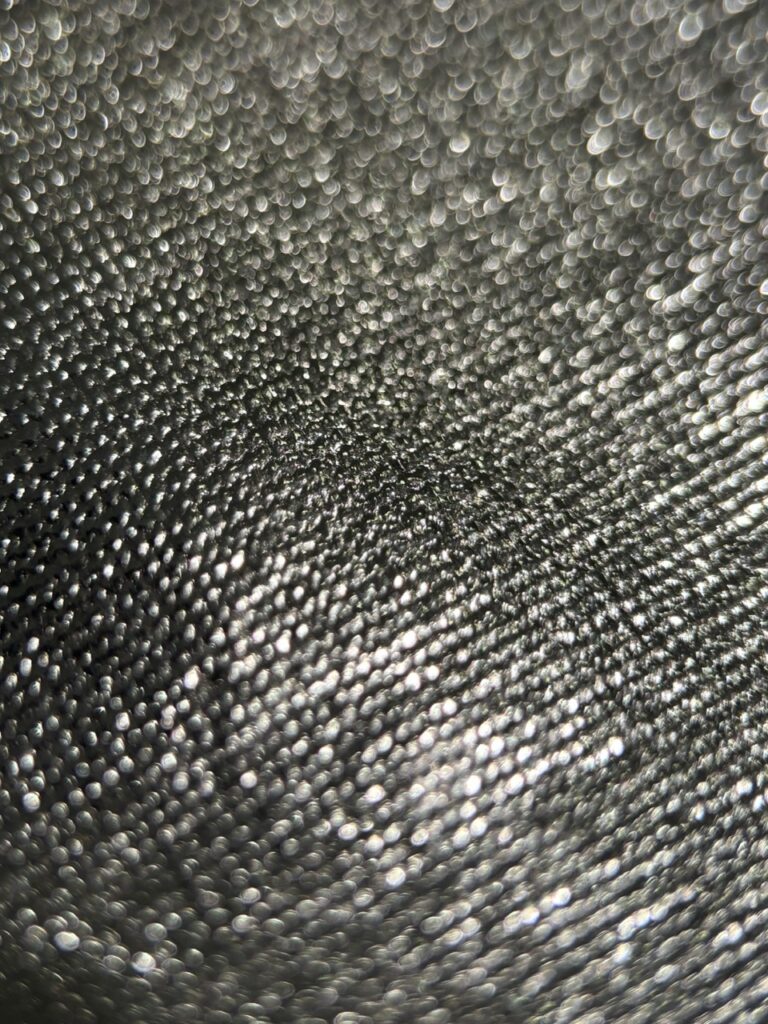
Synthetic fibers, such as polyester, are ubiquitous in fashion. Using polarized light microscopy (PLM), conservators can identify the smooth, regular strands of a synthetic fiber, and the bright colors reflected from the polarized light. These synthetic fibers are adaptable, but have environmental repercussions, such as releasing microplastics over time.
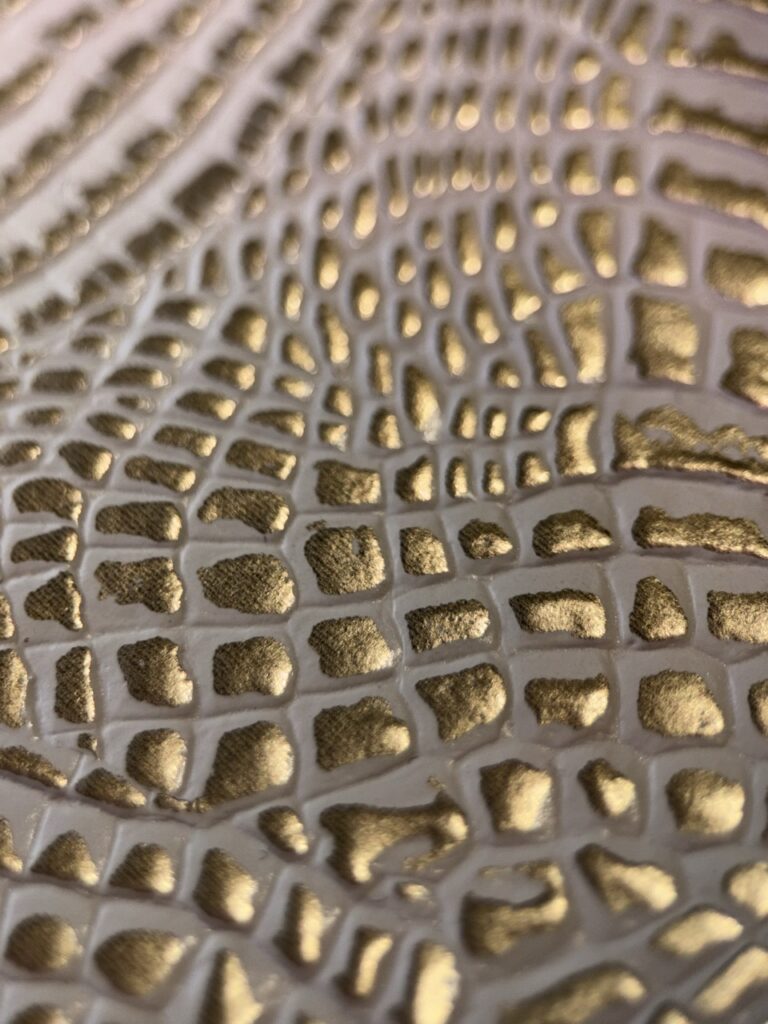
Fashion is an inherently physical experience. To preserve the delicate objects in museum collections, visitors are asked not to touch them. This virtual “touch case” allows visitors to look at these highly-tactile shimmering fabrics close up…



Condition Reporting
Conservators write condition reports to assess the stability of an object and to serve as a record. The reports document current damage, areas of weakness, and often include suggestions for treatment.
Curators and future conservators reference these reports to understand the object’s history and assess its suitability for display. The FTS students wrote condition reports for a variety of glittering study collection objects for this exhibition!
Explore the condition reports for…